
 DUTCH
DUTCH GERMAN
 FRENCH

Bengali Khichuri: Comfort, Ritual, and Seasonal Warmth

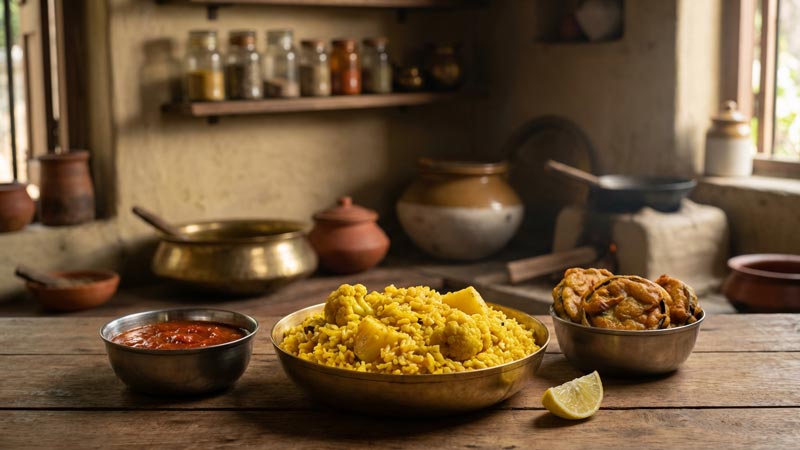
Bengali Bhoger and Niramish Khichuri
In Bengali food culture, khichuri prepared for ritual use is commonly referred to as bhoger khichuri or niramish khichuri. While the terms are often used interchangeably, they describe two closely related ideas that shape how and why this dish is prepared.
Bhoger khichuri refers to khichuri cooked as bhog—an offering made before being shared. Niramish khichuri describes the method and boundaries under which it is prepared.
What “Niramish” Means in Bengali Cooking
Niramish cooking excludes onion and garlic and follows a form of vegetarian preparation considered suitable for ritual contexts. In Bengali kitchens, this distinction is important and clearly understood.
While everyday Bengali cooking often includes onion, garlic, and mustard oil, niramish dishes deliberately step away from these elements to create food appropriate for offering and collective sharing.
Why Bhoger Khichuri Is Prepared
Bhoger khichuri is most closely associated with festivals such as Durga Puja, where it is prepared in large quantities and offered before being distributed to the community.
The dish is intentionally nourishing yet restrained. It is designed to sustain many people without indulgence, reinforcing the idea that ritual food should comfort and steady rather than excite.
Ingredients and Their Significance
Bhoger khichuri uses familiar Bengali ingredients chosen for seasonality, symbolism, and suitability for offering rather than complexity.
- Gobindobhog rice – valued for its aroma and soft, cohesive texture
- Dhuli moong dal – lightly roasted to add fragrance and depth
- Seasonal vegetables – typically potato, cauliflower, peas, and carrots
- Whole spices – bay leaf, cinnamon, cardamom, and cloves
- Turmeric – used for colour and warmth
- Rock salt – often preferred in ritual cooking
The vegetables mirror those used in celebratory rice dishes such as pulao, maintaining familiarity while remaining within niramish boundaries.
Mustard Oil, Ghee, and Ritual Choice
In everyday Bengali kitchens, mustard oil is traditionally the preferred cooking fat and defines much of the region’s flavour profile. Its sharpness and aroma are central to daily Bengali meals.
In bhoger and niramish preparations, however, mustard oil is often set aside in favour of ghee. Ghee is chosen because it is considered neutral, gentle, and suitable for offering. It carries spices without asserting dominance, allowing the dish to remain aromatic yet restrained.
In home cooking, some households may also choose ghee over mustard oil when a milder flavour is preferred, while still maintaining the overall character of bhoger khichuri.
How Bhoger Khichuri Differs from Everyday Khichuri
Everyday Bengali khichuri may include mustard oil, green chillies, and more assertive seasoning. Bhoger khichuri, by contrast, is softer, more cohesive, and richer through ghee rather than spice intensity.
Its texture is intentionally loose, and its flavour balanced, signalling that this dish belongs to collective, ceremonial eating rather than routine meals.
Place Within the Khichadi Tradition
Bengali bhoger khichuri represents the ritual end of the khichadi spectrum. It shares structure with everyday khichadi but is shaped by offering, season, and community preparation.
To see how it contrasts with regional everyday versions, grain-based adaptations, or South Indian forms, explore the Khichadi Recipe Hub.


 >
>