
 DUTCH
DUTCH GERMAN
 FRENCH


Holi Festival Guide — Traditions, Meaning, Colours & Festive Flavours
From the symbolism behind Holika Dahan to the joyful colour play of Rangwali Holi — and from classic sweets to modern home celebrations in Europe — this is a calm, complete guide to the festival that brings spring to life.
Quick navigation
- What Holi represents
- The two days of Holi: Holika Dahan & Rangwali Holi
- Traditions across regions: India, Phagwa & Europe
- Meaning behind Holi colours
- Festive flavours: sweets, snacks & drinks
- How to celebrate Holi at home in Europe
- Holi essentials checklist
- A safer, more sustainable Holi
- Carrying the spirit forward
What Holi Represents
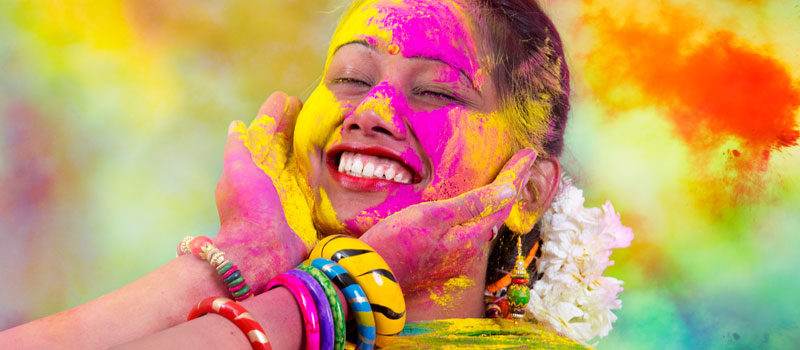
Holi is often described as the Festival of Colours, but colour is only the visible layer. At its heart, Holi is a celebration of renewal — a shift from the heaviness of winter into the warmth of spring, and from distance into reconnection. It is a festival where people soften the edges between “me” and “you”: neighbours become friends, old disagreements are dissolved, and homes open with a spirit of welcome.
Across generations, Holi has carried three themes that remain timeless:
- Renewal: letting go of what feels stale and beginning again with lighter energy.
- Equality: colours on the face erase social boundaries for a day — everyone becomes part of the same celebration.
- Connection: sharing sweets, visiting elders, laughter with friends, and simple gestures of forgiveness.
Holi is not only a festival you watch. It is a festival you step into — until joy feels shared, not owned.
The Two Days of Holi: Holika Dahan & Rangwali Holi
In many traditions, Holi unfolds over two days. The first is reflective, the second is exuberant. Together, they form a complete arc: release, then celebration.
1) Holika Dahan — The Night of Renewal
On the evening before Holi, communities gather around a ceremonial bonfire called Holika Dahan. The story most commonly associated with this ritual is the legend of Prahlad and Holika — a story about protection, courage and the eventual defeat of arrogance. The bonfire symbolises the burning away of negativity: resentment, fear, harshness, and anything that no longer belongs in the new season.
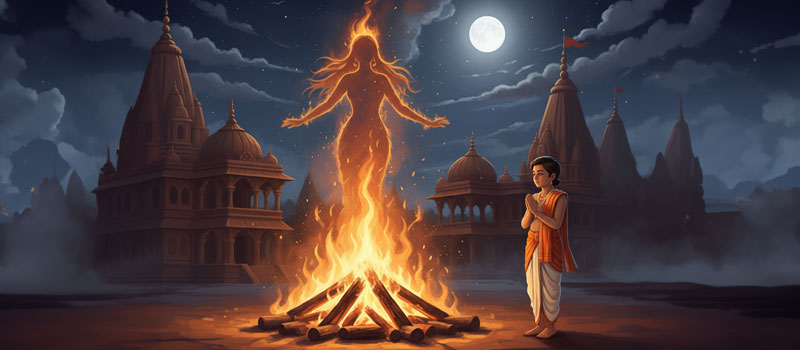
The details vary by region, but the intention is consistent. People often offer small symbolic items — grains, coconut, or simple prayers — as a way of saying: what is heavy can be released. The fire is not a spectacle; it is a pause. A threshold between what was and what can be.
2) Rangwali Holi — The Festival of Colour
The following day is Rangwali Holi — the colour day. Traditionally, friends and family apply gulal (colour powder) to one another as a sign of goodwill. The gesture is playful, but also meaningful: it says, “I meet you with joy.” In many homes, doors remain open and visitors arrive without formality. Sweets are offered freely. Music, laughter and lightness fill the space.
When Holi is celebrated well, it leaves behind a rare feeling: that community is still possible, even in busy lives. That joy can be collective, not competitive. That reconciliation can be simple.
Traditions Across Regions: India, Phagwa & Europe
Holi is celebrated across India, but its expression changes from place to place — shaped by local history, devotional culture, music, and community rhythm. And beyond India, Holi has taken on new names and new forms, especially in diaspora communities where tradition adapts to a different climate, space and pace of life.
Traditions in North India: Krishna’s Playful Spirit
In regions associated with Krishna — particularly around Mathura and Vrindavan — Holi often carries a devotional flavour. The festival is woven into stories of Krishna’s playful nature and the joyful relationship between Krishna and Radha. Celebrations in these areas can stretch over several days, filled with singing, temple gatherings, and colour play that feels both festive and sacred.
Barsana: The Folklore of Lathmar Holi
In Barsana, a village linked to Radha’s birthplace, Holi is known for the distinctive Lathmar Holi tradition (rooted in local folklore). While many visitors hear about it as a unique spectacle, for locals it is part of a larger cultural memory — a community ritual that carries humour, role-reversal, and a strong sense of identity.
Punjab: Hola Mohalla
In Punjab, a related festival called Hola Mohalla is observed by many communities — featuring spiritual gathering alongside demonstrations of martial arts and disciplined physical skill. The emphasis here is not only on colour and play, but also on courage, readiness and communal strength.
West Bengal: Dol Jatra
In parts of West Bengal and surrounding regions, Holi overlaps with Dol Jatra — a devotional celebration marked by singing, processions and the gentle application of colour. The mood can feel more lyrical than noisy — a reminder that Holi has many emotional registers, from exuberant to tender.
Phagwa: Holi in Suriname (And Why It Matters in the Netherlands)
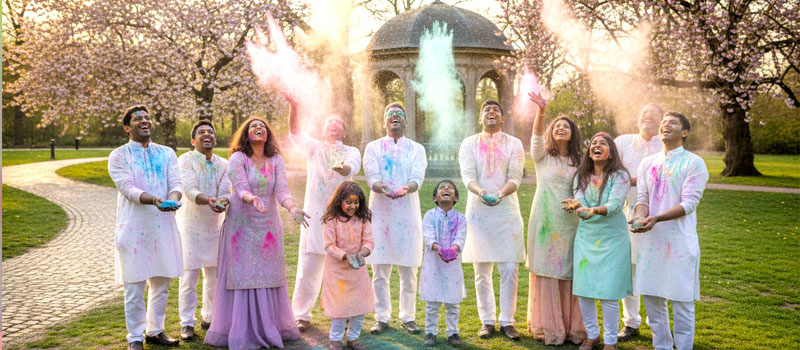
For many families in the Netherlands, Holi is also known as Phagwa, reflecting Surinamese heritage. Phagwa celebrations often include community singing traditions such as Chautal, festive gatherings, and a strong emphasis on unity — frequently expressed through white clothing that becomes a canvas for colour.
Phagwa carries a unique cultural bridge: Indian roots, Caribbean history, and European present-day life. It is tradition that has travelled — and stayed alive. In practical terms, it also shapes how Holi is celebrated locally: in parks, community halls, family homes, and neighbourhood gatherings across Dutch cities.
Holi in Europe Today: Smaller Scale, Same Spirit
In Europe, Holi often becomes more intentional. Homes are smaller than open courtyards. Weather can be unpredictable. People may celebrate in apartments, or gather briefly with friends rather than all-day open-house traditions. But the festival’s essence remains unchanged: a moment to reconnect, share something sweet, and step into spring with joy.
Many families keep Holi simple: a touch of gulal, a small plate of mithai, a warm drink, and a meal that feels festive without being exhausting. In a modern life, that simplicity is not a compromise — it is often the most sustainable way to keep tradition alive.
The Meaning Behind Holi Colours
The colours of Holi are not random. Over time, communities have associated colours with certain qualities — not as strict rules, but as symbols that add depth to celebration. Even today, many people choose colours deliberately: to represent a wish, a blessing, or a mood for the new season.
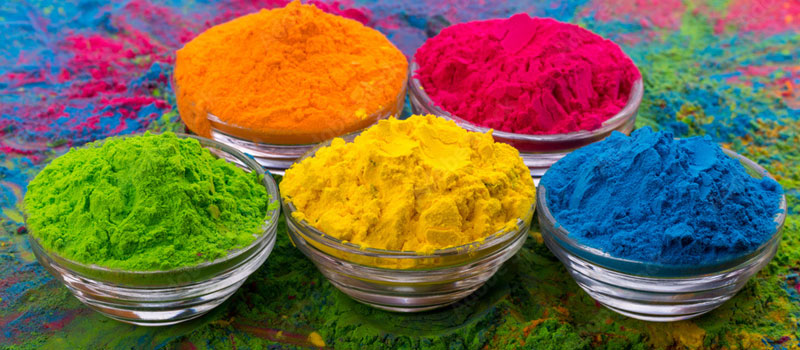
Warmth, affection and celebration. Often linked to love, energy and the heart-opening joy Holi brings.
Turmeric, vitality and auspiciousness. A colour of brightness and optimism — like spring sunlight.
Renewal, harvest and growth. A reminder that the season is turning and the earth is waking.
Devotion and Krishna’s playful spirit — a colour of depth, calmness and sacred joy.
One reason white clothing is common during Holi is practical — it makes colours visible — but it is also symbolic. White becomes a clean beginning. The colours then become the story: what life added, what community shared, what the season brought.

Festive Flavours: Sweets, Snacks & Drinks
Food is inseparable from Holi. In many homes, cooking begins before the festival itself: sweets are prepared in advance, snacks are stocked, and drinks are made ready for guests who may arrive spontaneously. Holi food is not only about taste — it’s about hospitality. It is the edible version of the festival’s message: “Come in. Share. Stay a while.”
Traditional Holi Sweets
Holi sweets tend to be celebratory and shareable — the kind of items you can place on a tray and offer again and again throughout the day. If you are celebrating in Europe, these sweets also travel well: they can be made in advance, stored safely, and served without stress.
- Gujiya — a classic stuffed sweet, often filled with khoya, nuts and gentle spices.
- Malpua — soft, syrupy pancakes that feel festive even in small batches.
- Ladoo — a universal favourite, perfect for gifting and quick sharing.
- Mithai assortments — ideal when you want variety without heavy preparation.
Festive Drinks
Holi drinks are designed for togetherness — served in glasses, shared after colour play, and often blended with aromatic notes like rose, saffron, cardamom or nuts. A drink can instantly make a simple meal feel like a celebration.
- Thandai — cooling, aromatic, often made with nuts and spices.
- Rose-infused milk — a gentle, festive drink that feels familiar and comforting.
- Rooh Afza blends — quick, nostalgic and perfect for gatherings.
Savoury Snacks
Savoury snacks balance the sweetness. They also match the informal rhythm of Holi: people snack between visits, between laughs, between music and conversation.
- Pakora — comforting, festive, and surprisingly easy to prepare at home.
- Namkeen — crunchy, shareable, and perfect with tea.
- Chaat-style bites — quick to assemble for a party platter.
If you already have a dedicated recipe article, keep this section as the “overview”, then send readers to the detailed recipes page: Explore Holi Recipes. That way, this pillar page stays broad and authoritative, while the recipe page goes deep.
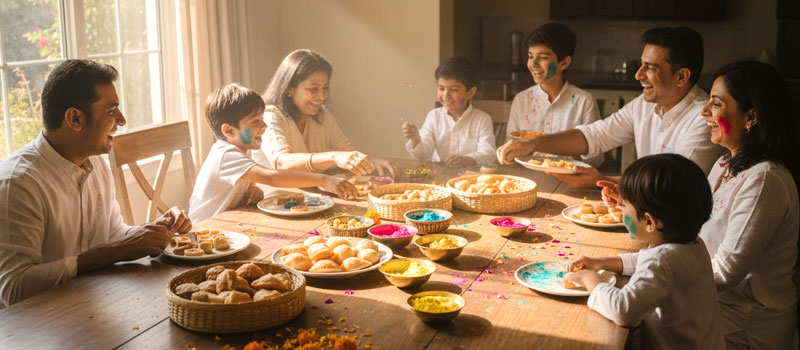
How to Celebrate Holi at Home in Europe
A beautiful Holi celebration does not require a large space, loud music, or a long guest list. In fact, many families in Europe celebrate Holi in a way that feels more intimate — and often more sustainable. The key is to choose a few meaningful elements and do them well: a small ritual, a gentle touch of colour, and a meal that feels festive.
A simple one-day Holi plan
- Evening before: Light a diya, say a quiet intention, and set out a small tray of sweets.
- Morning: Apply a small touch of natural colour, call or visit family, share something sweet.
- Midday: A festive lunch — even one special dish is enough.
- Evening: Tea, snacks, music, and a calmer closing to the day.
Hosting without stress
Holi is joyful — but no one enjoys celebration that turns into exhaustion. If you are hosting, make it easy on yourself:
- Choose one “hero” sweet and one snack, and keep the rest store-bought.
- Use natural colours and keep them in small bowls to avoid mess.
- Serve drinks that are quick to make in batches.
- Focus on warmth, not perfection — Holi is not a performance.
In a modern home, Holi becomes less about scale — and more about intention. The festival stays alive when it feels doable.
Holi Essentials Checklist
Whether you celebrate with a big gathering or a quiet family moment, a simple checklist helps. This is also where your blog gently transitions into practical shopping — without losing the cultural tone.
Natural gulal or skin-friendly colours, ideally easy to clean.
Gujiya-style treats, ladoo, or a small mithai assortment.
Namkeen, pakora ingredients, or shareable party snacks.
Thandai mix, rose syrup, Rooh Afza, nuts and spices.
A diya, incense, small offerings — keep it simple and meaningful.
Dry fruits, mithai, snacks, or a curated festive hamper.
Delivered across Europe by Ekirana — curated festival essentials, trusted staples and celebratory flavours in one calm place.
A Safer, More Sustainable Holi
Holi is joyful, but modern celebrations benefit from a few mindful choices — especially in Europe where indoor spaces, clothing care, and skin sensitivity are common concerns. The goal is not to remove the fun. It is to keep the festival kind — to people, homes, and the environment.
Choose colours with care
- Prefer natural or skin-friendly colours, especially for children and sensitive skin.
- Use smaller quantities — the celebration is in the gesture, not the volume.
- Keep a towel and gentle cleanser ready, and avoid rubbing colour harshly into skin.
Protect hair, skin and fabrics
- Apply a light layer of oil or moisturiser before colour play for easier clean-up.
- Wear older clothing, or keep a simple “Holi outfit” for the day.
- For indoor celebrations, use a small bowl of colour and apply gently instead of throwing powder.
Keep the celebration waste-light
- Use reusable plates and cups where possible.
- Choose snacks that don’t require excessive packaging for serving.
- Make one meaningful sweet at home and complement it with curated store-bought items.
Carrying the Spirit Forward
Holi ends, but its feeling can linger — if we allow it. The festival offers a rare permission: to begin again without drama. To reconnect without keeping score. To step into spring with a lighter heart.
Across continents, Holi changes shape. In some places it is a full day of colour and music. In others it becomes a quieter home celebration, a small sweet, a gentle ritual, a tray shared with neighbours. What stays constant is the message: joy is meant to be shared.
Holi reminds us that life is allowed to be bright — and that community can still be joyful, even in modern times.


 >
>