
 DUTCH
DUTCH GERMAN
 FRENCH

Why Ganesh Chaturthi is Celebrated? Information, Significance, Rituals, and When is it?

Ganesh Chaturthi – Celebrations & Symbolism of Lord Ganesha
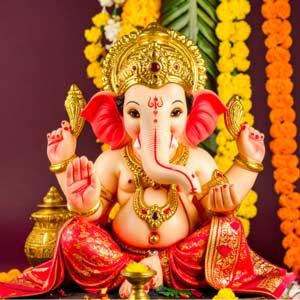
Ganesh Chaturthi, one of the most joyous and revered festivals in India, is celebrated in the Hindu month of Bhadrapada (August–September). This vibrant 10-day festival marks the birth of the beloved elephant-headed deity, Lord Ganesha. Known by many names such as Sumukha, Ekadanta, Lambodara, Vighnanashaka, and Vinayaka, Ganesha is worshipped as the remover of obstacles, the giver of wisdom, and the bringer of prosperity. Devotees celebrate with prayers, decorations, and community gatherings, seeking his blessings for knowledge, harmony, and success in life.
Lord Ganesha’s Symbolism – The Deeper Meaning Behind His Form
Every feature of Lord Ganesha carries deep meaning. From his elephant head to the mouse at his feet, each element tells a story of virtues, life lessons, and spiritual guidance.

The large Elephant Head
Lord Ganesha, son of Shiva and Parvati, is the God of new beginnings and the remover of obstacles. Worshipped first at the start of any auspicious event, he is also known as Vigneshwara, Vinayaka, and Ganapati. His large elephant head symbolises wisdom and understanding, guiding us to clear life’s hurdles and move forward, just as elephants create paths through the forest.
The large Elephant ears
Ganesha’s large ears symbolise deep listening. The ideal seeker hears fully, filters noise, and gathers good ideas with humility. They remind us to be patient, give others our full attention, and truly understand before responding. Large ears also reflect openness — a willingness to learn from anyone, no matter their status or background.
The large trunk
Strength with flexibility—able to do the subtle and the mighty. Its curve echoes Om, the primordial sound of creation.
The big, round belly
Holds the cosmos—digesting both joy and hardship. A reminder to meet life with patience and balance.
The two tusks (one broken)
Right tusk = wisdom; left = emotion. The broken tusk teaches: let wisdom guide and refine emotion.
The small eyes
Focus and insight beyond ego—see clearly, avoid distraction, and act with humility.
Trident and Axe
The trident marks mastery over time—past, present, future. The axe cuts attachments and removes inner obstacles.
The Four arms
Signify mind (manas), intellect (buddhi), ego (ahamkara), memory/conditioning (chitta). Axe repels harmful desires; rope/whip draws us back to the path; blessing hand protects; lotus points to self-realisation.
Human body form
Approachability and compassion—divinity that meets us where we are.
The yellow and red clothes
Yellow: purity, peace, sense-control. Red: active engagement in the world—do your duties truthfully and purely.
Lord Ganesha’s vehicle — the tiny mouse
The restless mind and the ego—small yet nibbling. Guided by wisdom, it serves rather than rules; also a reminder to care for the humble.
Abhay Mudra
“Fear not.” Use knowledge and reason to steady emotion and act with courage.
Modak – Lord Ganesha’s Favourite Sweet
Modak holds a special place in Ganesh Chaturthi celebrations as it is considered Lord Ganesha’s most beloved sweet. Shaped like a small dumpling with a soft outer layer and a delicious filling, modaks are offered to Ganpati as prasad during the festival. In Maharashtra, the traditional Ukadiche Modak is made from rice flour, coconut, and jaggery, while in other regions, fried or chocolate variants are popular. The sweet’s conical shape is said to represent spiritual knowledge, while its sweetness symbolises the bliss of wisdom. No Ganesh Chaturthi puja is complete without offering modaks to the Lord.


Symbolism of Ganapati Visarjan – Why the Ganesha Idol is Immersed in Water
The immersion of Ganesha idols is a deeply symbolic ritual marking the conclusion of Ganesh Chaturthi. It reflects the natural cycle of creation and dissolution — just as we emerge from the Earth, the clay idol returns to it.
The act represents Ganesha’s return to his divine abode, with the promise of visiting again next year. Spiritually, it signifies Moksha — liberation from worldly attachments and the journey towards salvation.
In many regions, especially Maharashtra and Gujarat, devotees carry the idol in vibrant processions before immersing it in rivers, lakes, or the sea, blending devotion, celebration, and the flow of life itself.
Ganpati Shloka & Prayer in Sanskrit
वक्रतुण्ड महाकाय सूर्यकोटि समप्रभ ।
निर्विघ्नं कुरु मे देव सर्वकार्येषु सर्वदा ॥
"Vakra Tunda Mahakaaya Koti Surya Samaprabha. Nirvignam Kurume Deva Sarva Kaaryeshu Sarvadaa"
O Lord Ganesha, of mighty form and elephant head, radiant as billions of suns — please remove all obstacles from my endeavors, always and forever.
About the Author

Related Posts

Buying Ganesh Idols in Netherlands & Belgium – Your 2025 Festival Guide

DIY Ganesh Idol at Home vs Ready Eco-Friendly Idols: What’s Right for Your Family?
Ganpati Visarjan: Saying Goodbye with Devotion and Care for Nature


 >
>